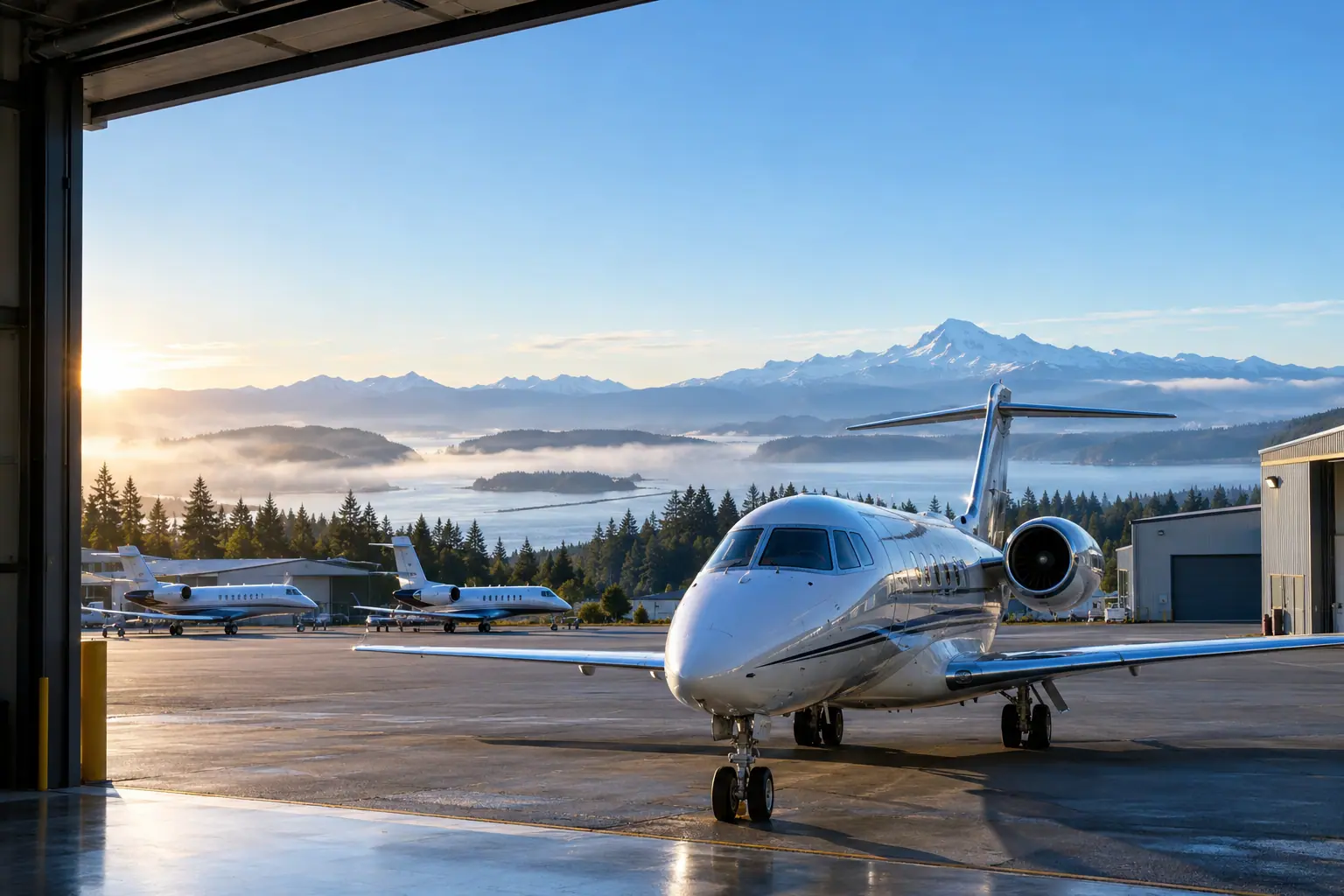
Jet Charter Seattle Paine Field
Paine Field is the wide-runway option north of Seattle. Its 9,010-foot strip handles jets that Boeing Field sometimes cannot. Get quotes before you book.
Jet charter Seattle Paine Field starts with a simple question: does the aircraft you want fit the runway and the weather. Paine Field sits at 606 feet with a 9,010-foot longest runway, so most midsize and heavy jets depart with full tanks even in August heat. Brokers arrange the flight through operators who hold operational control and certificate the aircraft and crew under FAA Part 135. We act as your agent under DOT Part 295, which means we shop the trip and you see the quote before anything is committed.
The field serves Snohomish County and the north side of the metro. Travelers from Bellevue, Everett, and the Eastside often pick it over Seattle–Tacoma because the terminal is small and the drive is shorter. A jet charter Seattle Paine Field trip often cuts ground time by an hour or more compared with the main hub, and that matters on a same-day return. Flights to Hawaii, Phoenix, and Los Angeles are routine from here; so are empty legs that reposition aircraft back to the region.
Paine Field is also a Boeing widebody plant, so heavy aircraft traffic is normal and the runway infrastructure is built for it. That does not mean every jet type is available on short notice. Charter inventory moves, and pricing is an estimate until an operator confirms. When you compare a Paine Field jet against Boeing Field, then runway length and density altitude decide the answer. Read on for the numbers you can plan around.
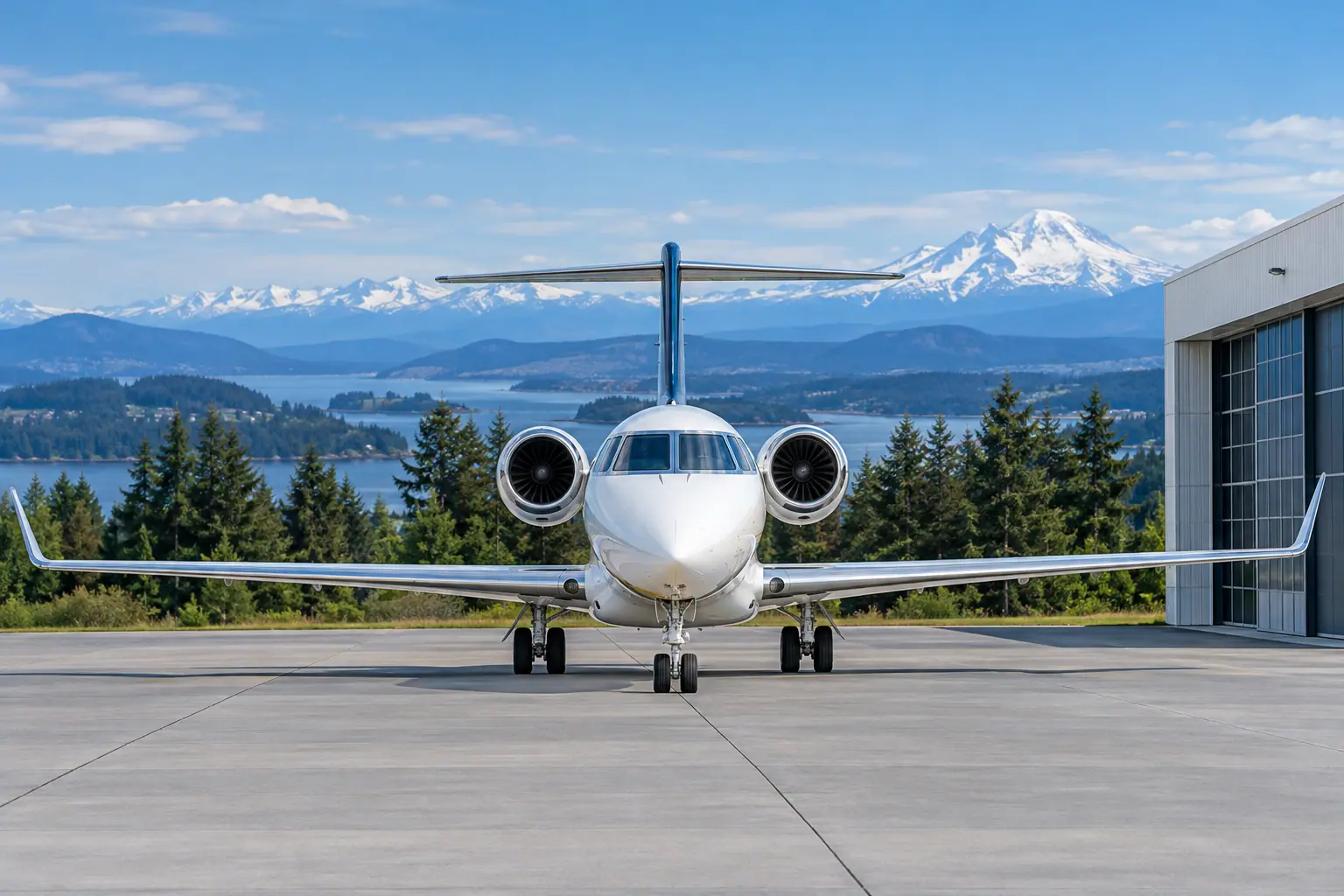
Runway length at Paine Field
Paine Field's longest runway is 9,010 feet, which is enough for most large-cabin jets at full fuel in summer heat. The field elevation is 606 feet, and density altitude peaks around 2,500 feet on a 115F day, so performance margins stay generous. A 9,010-foot runway at 606 feet elevation lets heavy jets depart Paine Field at gross weight on all but the hottest afternoons. Compare that with Bremerton National at 6,000 feet if you are considering a smaller field. When summer temperatures push the density altitude toward 2,500 feet, then the operator may still reduce payload on the longest transoceanic legs; ask for the performance number in writing.
| Runway | Dist | Width | Surface |
|---|---|---|---|
| 16R/34L | 9,010 ft | 150 ft | Asphalt |
| 16L/34R | 3,004 ft | 75 ft | Asphalt |
FBO and ground handling options at PAE
Paine Field has limited public FBO listings compared with Boeing Field, so ground handling is often arranged by the operator as part of the quote. Ask which provider will meet the aircraft and whether ramp fees are included. Because Paine Field lists fewer FBOs than Boeing Field, confirm handling and ramp fees in the quote before you sign. If your trip is international, then CBP clearance needs to be scheduled; the operator or your broker should confirm the port of entry and timing. When ground arrangements are unclear, then the final invoice is where surprises appear, so get the line items in writing.
What Paine Field is best for
- Hawaii and West Coast nonstops where runway length and payload matter on hot days.
- Snohomish County and Eastside departures that avoid the drive to Seattle–Tacoma.
- Heavy jet and large-cabin trips that need the 9,010-foot runway for fuel and passengers.
- Empty-leg positioning flights that bring aircraft back to the Puget Sound region.
| Class | Typical runway need | Here |
|---|---|---|
| Turboprop | 3,300 ft+ | Fits |
| Light jet | 4,000 ft+ | Fits |
| Midsize jet | 5,000 ft+ | Fits |
| Super-midsize jet | 5,200 ft+ | Fits |
| Heavy jet | 5,600 ft+ | Fits |
Density altitude and weather by season
July is the hottest planning month at Paine Field, with a high of 76F and a density altitude of about 1,900 feet; the peak on a 115F day reaches 2,500 feet. Winter is wet, not hot: January and December each average 18 wet days and highs near 47F and 45F. In July the density altitude at Paine Field runs about 1,900 feet, well inside normal jet limits. When you fly a winter evening departure, then de-icing and IFR routing are the variables to plan for, not runway length. Spring and fall are the sweet spot for performance and price.
| Month | Avg high | Wet days | Density altitude |
|---|---|---|---|
| Jan | 47°F | 18 | 0 ft |
| Feb | 47°F | 16 | 0 ft |
| Mar | 52°F | 15 | 300 ft |
| Apr | 57°F | 14 | 600 ft |
| May | 64°F | 10 | 1,100 ft |
| Jun | 70°F | 8 | 1,500 ft |
| Jul | 76°F | 3 | 1,900 ft |
| Aug | 77°F | 5 | 2,000 ft |
| Sep | 69°F | 10 | 1,400 ft |
| Oct | 59°F | 14 | 800 ft |
| Nov | 50°F | 18 | 200 ft |
| Dec | 45°F | 18 | -200 ft |
Getting to Paine Field
Paine Field sits in Everett, north of Seattle, with a small terminal and short curbside walks. Boeing Field, by contrast, lists four FBOs and a 10,007-foot runway but sits at 21 feet elevation closer to downtown. A Paine Field departure is typically quicker on the ground for north-end travelers than a Boeing Field departure with downtown traffic. When your trip is international, then plan for CBP scheduling and passport checks before departure. For domestic legs, TSA screening at the FBO is usually handled by the operator. Pick the field that matches your side of the metro and your aircraft type, not the one that sounds busier.
Private jet routes via Seattle Paine
Each of these 6 private jet routes is 818 to 2,080 nautical miles. One-way light jet estimates run $8,500 to $35,500.





Questions about this airport
How far is jet charter Seattle Paine Field from the Las Vegas Strip?
About 892 miles from Paine Field to the Strip, which is roughly a 2-hour flight in a light or midsize jet. The field's 9,010-foot runway supports those departures at full fuel in most conditions. Quotes vary by aircraft type and date, and prices are estimates until an operator confirms the trip. Ask for the flight time and fuel stop plan in the quote.
What is the runway length at Seattle Paine Field?
The longest runway is 9,010 feet at a field elevation of 606 feet. That is longer than Bremerton National's 6,000 feet and close to Boeing Field's 10,007 feet. For heavy jets and hot-day departures, the length gives useful payload margin. Density altitude peaks near 2,500 feet on a 115F day, which most large-cabin aircraft handle without a fuel stop.
How hot does it get at Paine Field in summer?
July highs average 76F and August averages 77F. July density altitude is about 1,900 feet, rising to a 2,500-foot peak on a 115F day. That is well within normal jet performance limits. Winter is the wetter concern: January and December each average 18 wet days, so de-icing and IFR routing matter more than heat from November through February.
Does Paine Field have FBOs for private jets?
Paine Field lists fewer public FBOs than Boeing Field, which has four. Ground handling is often arranged by the operator, so ask which provider will meet the aircraft and whether ramp fees are included. Because the field is smaller, confirm handling in writing before you book. When the quote is vague on ground services, then the final invoice is where extra charges appear.
Who operates the flights and who is responsible?
The flights are flown by operators holding FAA Part 135 authority, and those operators keep operational control of the aircraft and crew. We act as a charter broker under DOT Part 295 and arrange the trip on your behalf. We do not own aircraft. Quotes are estimates until an operator confirms availability. For international legs, CBP clearance is scheduled separately.
How does Paine Field compare to Boeing Field for jet charter?
Paine Field has a 9,010-foot runway at 606 feet elevation; Boeing Field has 10,007 feet at 21 feet and lists four FBOs. Paine Field is often quicker for north-end and Everett travelers; Boeing Field is closer to downtown. July density altitude is about 1,900 feet at Paine Field versus 1,200 feet at Boeing Field. Match the field to your side of the metro and your aircraft type.