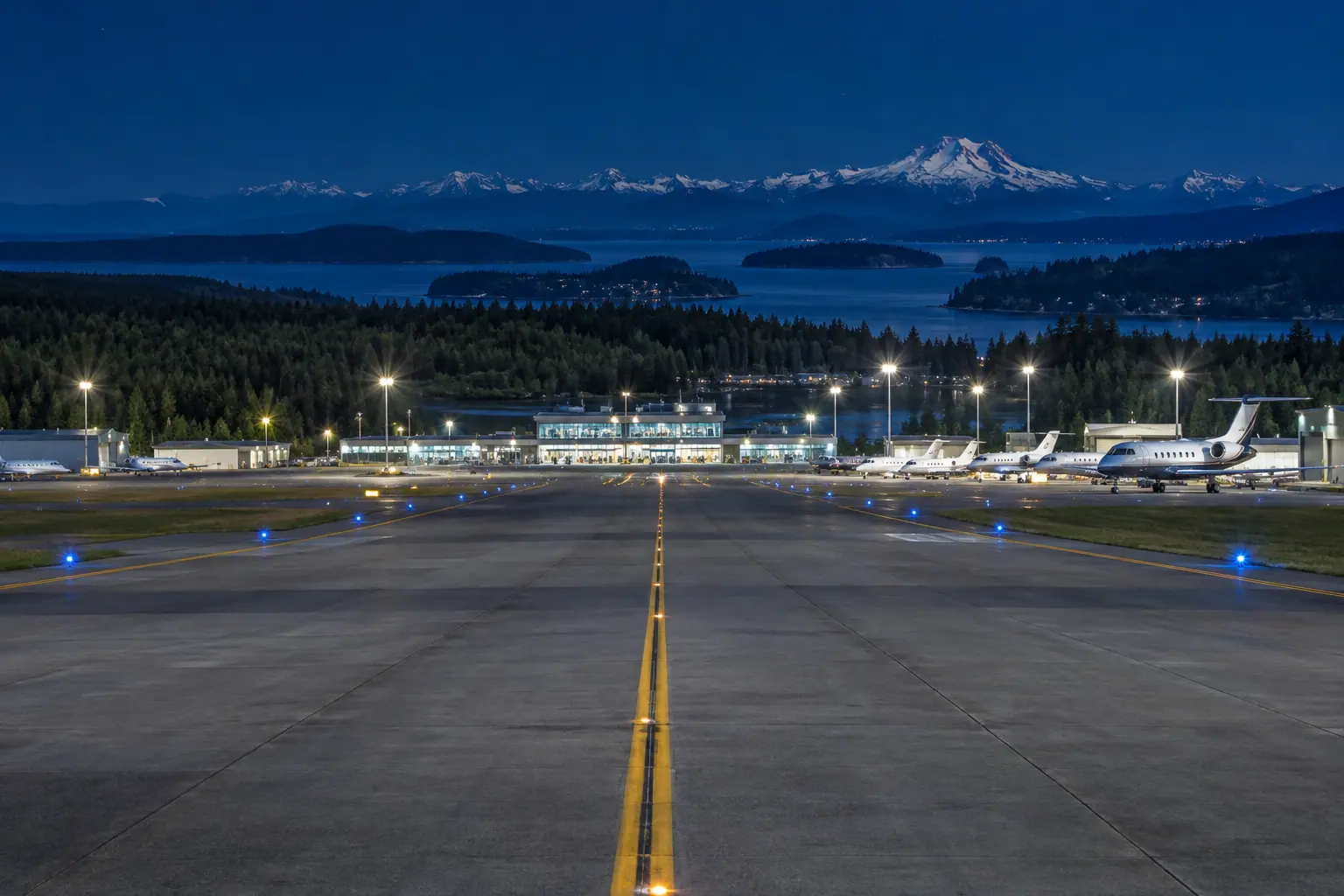
Jet charter Seattle Tacoma
This page covers jet charter Seattle Tacoma travelers book through KSEA. The field sits at 433 feet with a 11,901-foot runway. Estimates here are broker quotes, not posted fares.
Jet charter Seattle Tacoma requests usually start with KSEA, because the field's 11,901-foot runway and 433-foot elevation suit most business jets flown in the region. Seattle–Tacoma International carries the IATA code SEA and the ICAO code KSEA. It is the large commercial field south of the city, and it handles private flights alongside the airline traffic. The layout matters when you compare quotes, since a smaller field across town may price differently for the same trip.
Charter here is arranging, not operating. You book through a broker who acts as your agent under DOT Part 295 rules, and the flight itself runs under an FAA Part 135 operator that holds operational control, supplies the crew, and maintains the aircraft. That split is why quotes for the same route can differ in both price and aircraft type, even when both come back within an hour of each other. Nobody in this arrangement owns a fleet on your behalf.
A broker working the Seattle market compares jet types against your passenger count and bags before returning a number. Light jets cover short hops into Oregon and British Columbia. Midsize and super-midsize aircraft handle transcontinental legs with a full cabin. If your group is large or the trip is long, the quote will reflect a heavier aircraft and a longer runway requirement. Expect estimates, ask what is included, and treat any single figure as a starting point rather than a final price.
Runway length and summer heat both shape which jets can depart Seattle–Tacoma on a given day. The main runway is long enough for most of the charter fleet. Density altitude is the number that shifts, and it climbs through the warm months. A pilot checking performance on a July afternoon works from different figures than one departing in January. That is normal, and it is one reason operators confirm performance for each specific flight.
The field sits roughly 864 miles to the Strip, a figure brokers use when quoting Las Vegas runs. That distance puts Las Vegas comfortably inside the range of light and midsize jets from Seattle, so the aircraft choice often comes down to cabin size and baggage rather than fuel. Longer trips west to Hawaii or east to the Midwest pull in larger aircraft. Ask which category the quote assumes before you compare two numbers side by side.
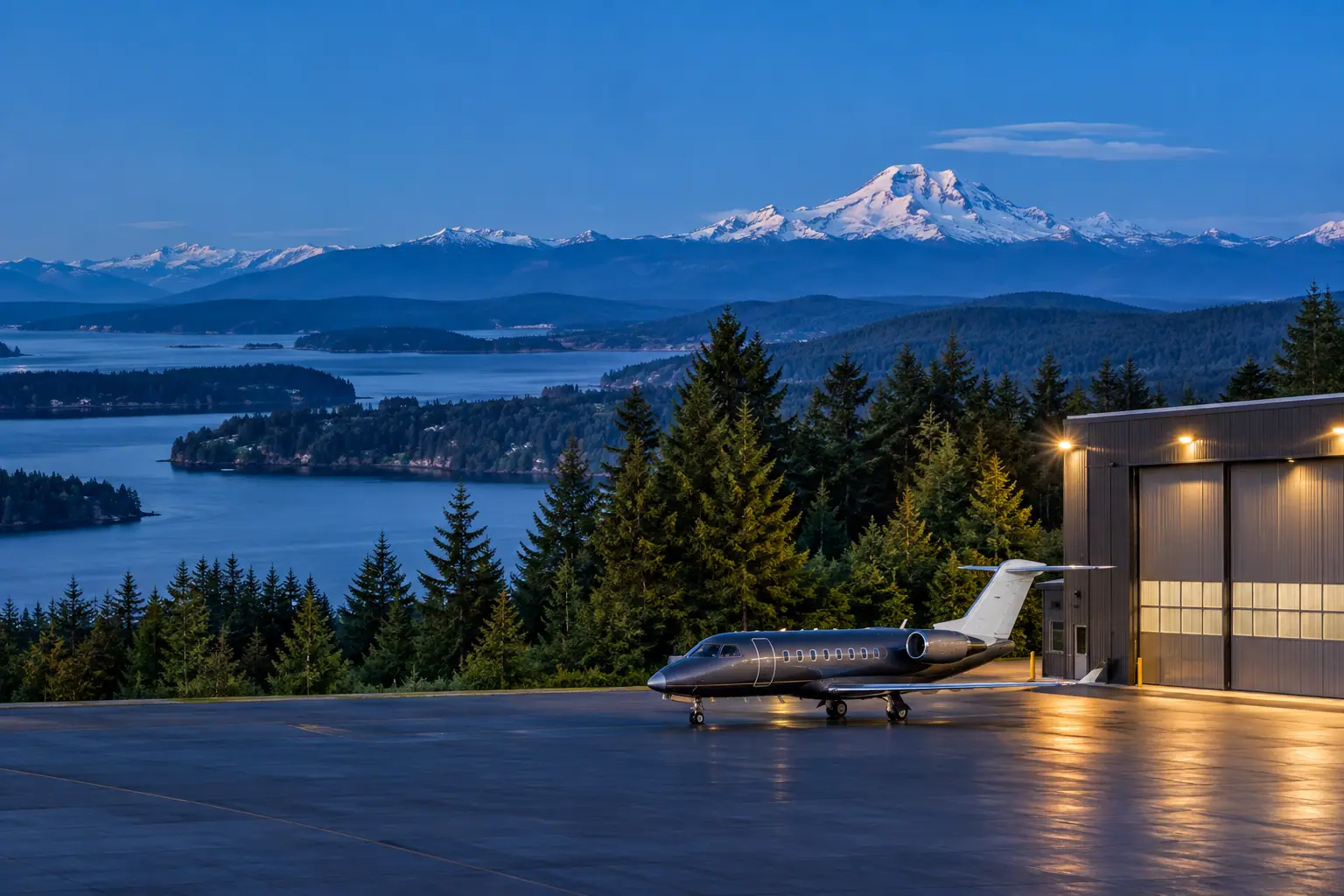
Runway length and field elevation
Seattle–Tacoma International sits at 433 feet above sea level with a longest runway of 11,901 feet, figures that clear most charter jets for departure on a standard day. The elevation is modest, so the runway does most of the work in hot weather. Density altitude, not elevation alone, is what a crew checks before loading a full cabin and full tanks on a July afternoon. A longer runway buys margin; a short one forces tradeoffs between fuel and payload.
| Runway | Dist | Width | Surface |
|---|---|---|---|
| 16L/34R | 11,901 ft | 150 ft | PEM |
| 16C/34C | 9,426 ft | 150 ft | PEM |
| 16R/34L | 8,500 ft | 150 ft | PEM |
FBOs and ground handling at KSEA
Signature Aviation is the FBO listed at Seattle–Tacoma International, and it is the fixed-base point where private flights are handled at this field. Ground handling, parking, and passenger pickup run through that facility rather than the airline terminals, which keeps the private side of the airport separate from the main concourse traffic.
Other fields in the region carry their own FBO lineups. King County International, better known as Boeing Field, lists four, and Bremerton National lists one. If a quote routes you to Boeing Field instead of KSEA, the ground experience changes along with the drive. Ask which airport the operator intends before you agree to a price.
Best for these kinds of trips
- Business travel between Seattle and California tech corridors, where a morning departure and same-day return beat airline connections.
- Las Vegas runs of about 864 miles, comfortably within light and midsize jet range from KSEA.
- Hawaii and transcontinental trips needing midsize or larger cabins with full baggage.
- Groups heading to British Columbia and the Pacific Northwest, where CBP clearance applies on the return leg.
| Class | Typical runway need | Here |
|---|---|---|
| Turboprop | 3,300 ft+ | Fits |
| Light jet | 4,000 ft+ | Fits |
| Midsize jet | 5,000 ft+ | Fits |
| Super-midsize jet | 5,200 ft+ | Fits |
| Heavy jet | 5,600 ft+ | Fits |
Weather and density altitude by season
July density altitude at Seattle–Tacoma reaches about 1,700 feet, and the peak figure at 115F climbs to roughly 2,300 feet, so summer performance planning matters even at sea level. Those numbers stay well below what mountain airports produce, but they still affect a heavily loaded jet. Crews compute performance for the actual temperature and weight on the day.
Rain is the bigger seasonal story. December and January each average 18 wet days, while July drops to 3. Winter flying out of Seattle more often means IFR conditions and deicing than heat-driven weight limits. If your trip is in the cold months, then build a little slack into the schedule for weather delays. Summer highs sit near 76F and 77F in July and August, which is mild by most standards.
| Month | Avg high | Wet days | Density altitude |
|---|---|---|---|
| Jan | 47°F | 18 | -300 ft |
| Feb | 47°F | 16 | -300 ft |
| Mar | 52°F | 15 | 100 ft |
| Apr | 57°F | 14 | 400 ft |
| May | 64°F | 10 | 900 ft |
| Jun | 70°F | 8 | 1,300 ft |
| Jul | 76°F | 3 | 1,700 ft |
| Aug | 77°F | 5 | 1,700 ft |
| Sep | 69°F | 10 | 1,200 ft |
| Oct | 59°F | 14 | 500 ft |
| Nov | 50°F | 18 | -100 ft |
| Dec | 45°F | 18 | -400 ft |
Getting to the airport and the terminal
Seattle–Tacoma International sits south of downtown near Interstate 5, and private flights use the FBO rather than the main terminal, so plan your drop-off around Signature Aviation. Allow extra time on weekday mornings when the airline side of the field is busiest. If you are coming from Bellevue or the Eastside, then the drive crosses the region's main north-south corridors. Confirm the meeting point with your broker before the day of travel.
Private jet routes via Seattle–Tacoma
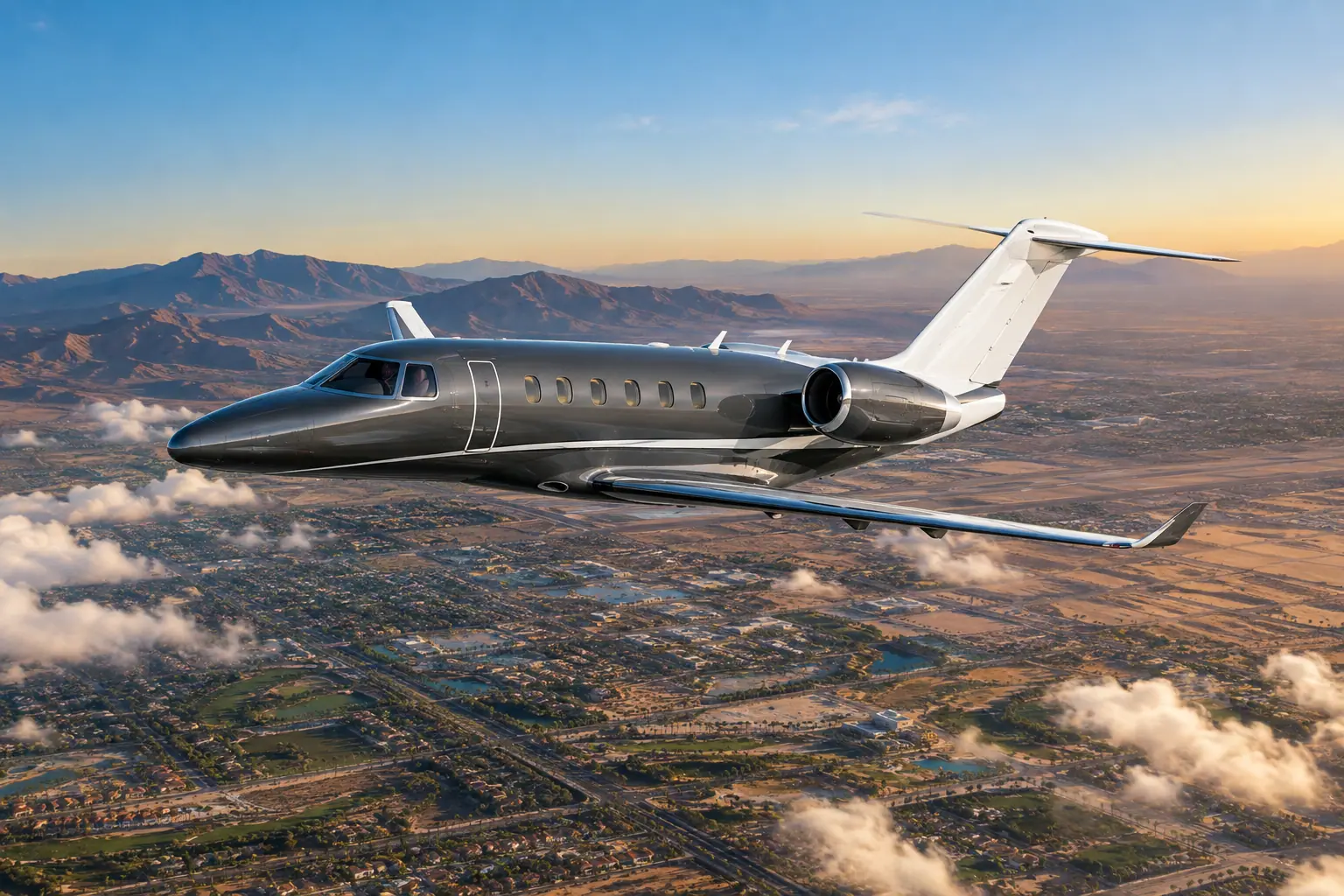
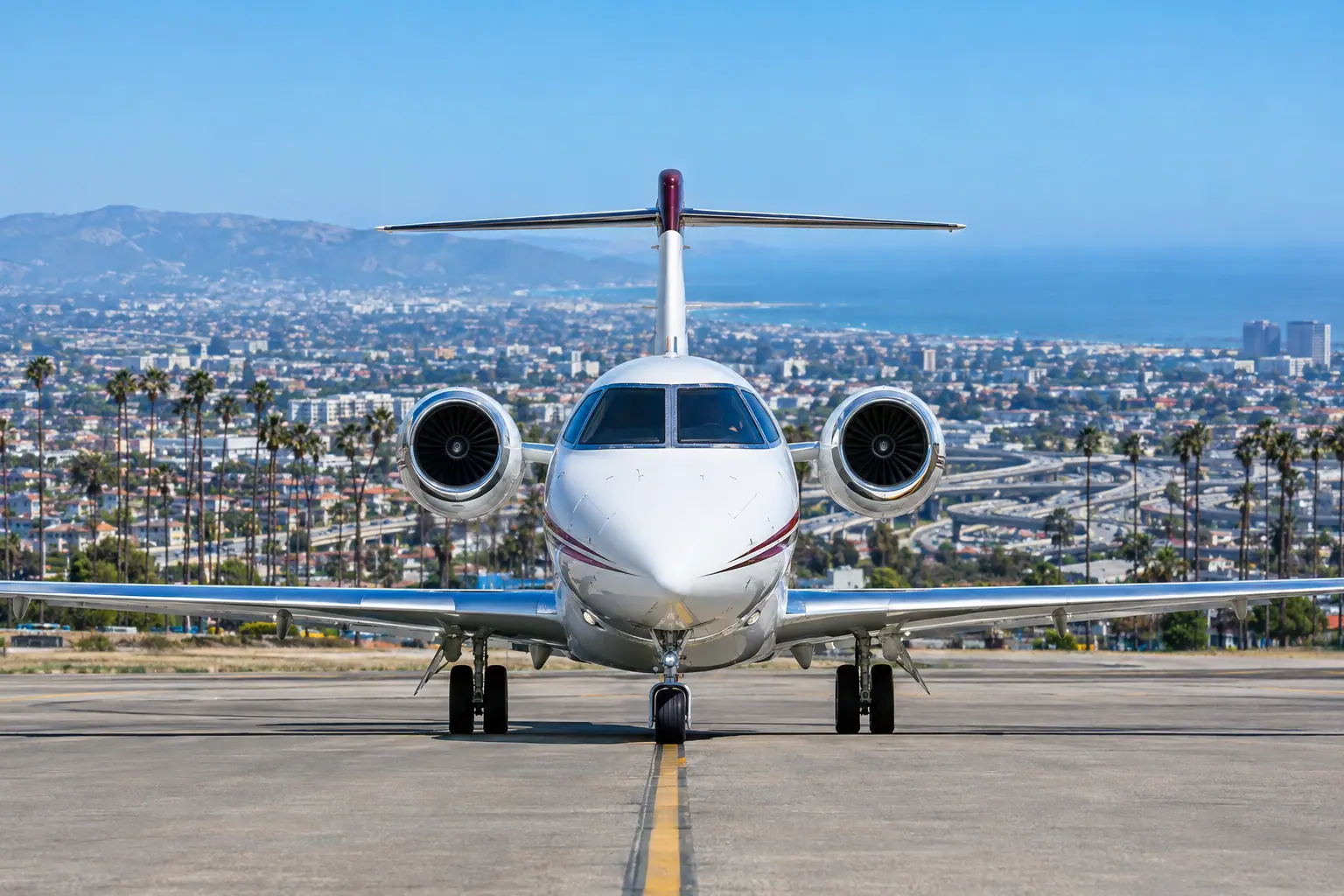
Each of these 6 private jet routes is 818 to 2,080 nautical miles. One-way light jet estimates run $8,500 to $35,500.
Questions about this airport
How much does jet charter Seattle Tacoma cost?
There is no posted fare. Quotes are estimates built from aircraft category, flight time, and crew duty for your specific trip. The 864 miles to the Strip, for example, prices differently in a light jet than a midsize one. Ask the broker what the estimate includes, whether crew and fuel are bundled, and what would change the final number before you compare two quotes.
Which airport do private jets use for Seattle?
Seattle–Tacoma International, ICAO code KSEA, is the large field, at 433 feet elevation with a 11,901-foot runway. Some trips route to King County International or Bremerton National instead, depending on aircraft and destination. Ask which airport the quote assumes, because the ground handling and the drive both change with that choice.
What is the runway length at Seattle–Tacoma?
The longest runway is 11,901 feet. That length clears most charter jets for departure on a standard day, though crews still compute performance for the actual temperature and weight. On a hot July afternoon the density altitude reaches about 1,700 feet, and the peak figure at 115F climbs to roughly 2,300 feet, so loading can be adjusted.
How many FBOs serve private flights at KSEA?
Signature Aviation is the FBO listed at Seattle–Tacoma International. Private flights are handled through that facility rather than the airline terminal, which keeps the two sides of the airport separate. If you compare this field with Boeing Field, note that Boeing Field lists four FBOs, so the choice affects where you park and where passengers meet the crew.
When is density altitude highest in Seattle?
July and August are the warm months, with density altitude around 1,700 feet and highs near 76F and 77F. Winter runs the other way, with negative density altitude figures in December, January, and February and 18 wet days in each of those months. If your trip falls in summer, then expect performance planning to matter more than in the cold months.
Who is responsible for the flight itself?
The operator holds operational control. Charter flights run under FAA Part 135 operators who supply the crew and maintain the aircraft. The broker you book through acts as your agent under DOT Part 295 and does not operate the flight. On international legs, including returns from British Columbia, CBP handles clearance. Ask for the operator's name before you book.